


What Is a Good HERS Score? Benchmarks Explained

Last Updated: November 8, 2026
Quick Summary
A good hers score is generally a lower one, because the HERS Index measures how much energy a home is expected to use compared with a reference home that scores 100. Each point below 100 means less modeled energy use, and a score of 0 means the home produces as much energy as it uses over a year.
A score of 100 matches the reference home's modeled energy use; lower scores use less.
Code-built new homes commonly fall between 85 and 100, depending on climate and specifications.
Efficient new homes are frequently in the 40 to 70 range, a reasonable target for energy-efficient builds.
RESNET reports a 2025 average score of 53 across HERS-rated homes, two points better than 2024.
A HERS score is a modeled comparison, not a forecast of your actual energy bills.
What does your HERS score really mean?
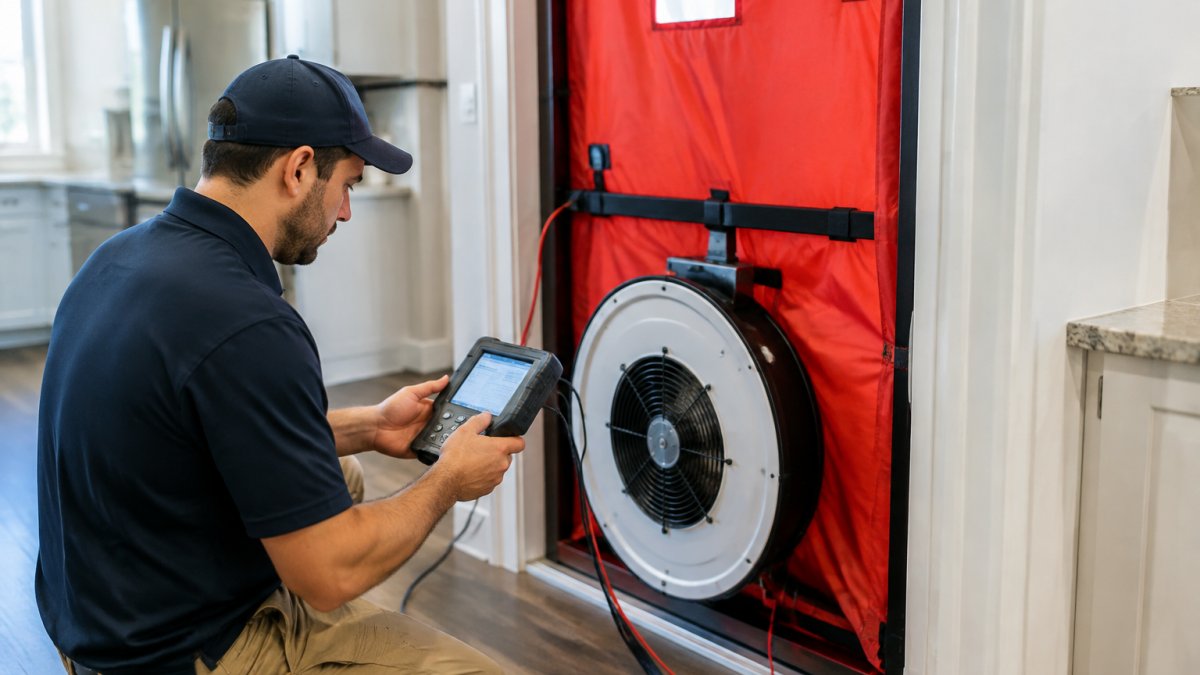
Central Duct Testing provides certified HERS testing and Title 24 compliance for Sacramento-area projects.
Table of Contents
What a HERS Score Measures and How the Scale Works
A good HERS score is generally a lower one, because the HERS Index measures how much energy a home is expected to use compared with a reference.

The HERS (Home Energy Rating System) Index is a scoring scale for residential energy performance. A rater models a home's energy use for heating, cooling, water heating, lighting and appliances, then compares that modeled use with a standard reference home. Readers weighing whether a score is acceptable may also want to see what a HERS rating test costs and what it involves before booking one. The reference home sets a score of 100, and the scale runs downward from there, so a lower score means the home is expected to use less energy than the reference.
How the Reference Home Sets the Baseline
The standard reference home is a model with the same size, shape and orientation as the home being rated, but with characteristics defined by the rating standard. Because the baseline is modeled, two homes with identical scores can still behave differently in real life, which is one reason the score should be read as a comparison tool rather than a bill forecast.
The article's key benchmarks for reading a HERS score are summarised below.
Score | Meaning | Source note |
100 | Matches the reference home's modeled energy use | Reference home baseline |
0 | Produces as much energy as it uses yearly | Net-zero point |
Above 100 | Typical of older existing homes | Often seen in older homes |
85 to 100 | Standard code-built new homes | Varies by climate and specs |
40 to 70 | Reasonable target for efficient new builds | New energy-efficient homes |
53 | 2025 average across HERS-rated homes | RESNET 2026 trends report |
HERS Score Meaning: Reading the Number Correctly
A HERS score of 100 means the home is modeled to use about the same energy as the reference home. For more context, see a complete guide to HERS ratings.
Scores above 100 are common in older homes. Typical existing homes often score over 100, while standard code-built new homes tend to fall in the range of 85 to 100, according to RESNET's consumer guidance on HERS ratings.
Read the number as a relative measure. A 60 is not a grade on a test; it means the modeled energy use is well below the reference, and the reason it is low (insulation, windows, air sealing, equipment or on-site generation) matters as much as the number itself.
What Counts as a Good HERS Score for New and Existing Homes
For most new homes built to current code, a score in the 40 to 70 range is a reasonable target for an energy-efficient build. EcoFlow's guide to HERS scores notes that new energy-efficient homes often fall in that range.
The average across all HERS-rated homes is also improving. RESNET's 2026 Trends in HERS Rated Homes Report reports an average score of 53 for 2025, two points better than in 2024, which RESNET describes as a 47% improvement in efficiency relative to the reference.
Use the benchmark that fits your situation. A builder aiming for a compliance margin, a homeowner comparing an existing house, and a buyer evaluating a net-zero design are asking different questions, and the same number answers each one differently.
Typical Scores for Older, Code-Built, and Efficient Homes
Older existing homes: often above 100, reflecting leakier construction and older equipment.
Code-built new homes: commonly around 85 to 100, depending on climate zone and specifications.
Efficient new homes: frequently 40 to 70, sometimes lower with solar or advanced envelope upgrades.
What a Score of 80 Means in Practice
A score of 80 means the home is modeled to use about 20 percent less energy than the reference home. For a code-built new home, that is a respectable result. For an older home being upgraded, it may represent a substantial improvement.
What the number does not tell you is your actual bill. Usage habits, thermostat settings, occupancy and local utility rates all change real costs. Treat 80 as a planning benchmark, and confirm the specifics with your rater.
| section:HERS Rating Calculator: How Scores Are Modeled and What Is Included
What the Score Does Not Predict and Your Next Step
A HERS score is a modeled comparison under standard assumptions, not a forecast of your bills, your comfort in every room, or how the home will perform under unusual occupancy. Climate zone, fuel type, thermostat settings, occupancy and behavior can move real energy use well away from the modeled result, so the score is best read as a relative efficiency benchmark rather than a promise about costs.
How to Verify and Use a Rating When Buying or Selling
When a rating is part of a transaction, ask for the full report rather than the headline number. A complete report should identify the rater and rating provider, state whether the rating is projected (plan review) or confirmed (field-verified), list the modeled end uses, and show which inputs were tested versus assumed.
To compare two homes fairly, compare confirmed ratings of similar age and scope, and check that both used the same rating standard and similar assumptions. A projected rating on a new build and a confirmed rating on an existing home are not directly interchangeable, even if the numbers look close.
Questions worth putting to the rater or builder:
Was duct leakage and envelope air leakage actually tested, or assumed?
Which end uses are included, and is on-site generation counted separately?
What efficiency level does the score imply for the envelope versus the equipment?
Has the home been re-rated since any major upgrade?
Practical Improvement Priorities and Trade-offs
If you want a better score, the highest-return measures are usually envelope and duct work first, air sealing, insulation, and duct sealing, because they reduce losses that equipment upgrades cannot fix. Equipment replacement, window upgrades and solar typically come later, and their value depends on climate, fuel type and the condition of the existing home.
If you are planning a project in the Sacramento area, start by confirming your Title 24 and HERS requirements with a qualified rater. Central Duct Testing offers certified HERS testing and Title 24 compliance services for residential and commercial properties. Contact Central Duct Testing to discuss your testing needs, or read how to find and hire a California HERS rater before you book.
Frequently Asked Questions
What is a good HERS score for a new home?
A new home built to current code is generally modeled against the reference home on the HERS Index. Lower numbers indicate better energy performance, with a score of 0 representing a home that is modeled to produce as much energy as it uses. The right target depends on climate, fuel type, and how the home is used. Builders targeting a specific score usually confirm the goal with their certified HERS rater before framing begins.
Is a lower HERS score better?
Yes. On the HERS Index, a lower score means the home is modeled to use less energy than the reference home. The reference home is defined to the same size and climate, so a score of 50 means roughly half the modeled energy use of the reference. A score of 0 represents a net-zero energy home on paper. The score reflects modeled energy use under standard assumptions, so it should be read alongside actual utility bills rather than treated as a guarantee of savings.
What is a good HERS score for an existing home?
Existing homes typically score above 100, because the reference home is built to a newer code standard than many older houses. A rating that falls below 100 generally points to upgrades that have improved efficiency. Whether a given number is good depends on the home's age, size, climate zone, and whether the upgrades were insulation, air sealing, ductwork, or equipment. A rater can identify which improvements would move the score most.
Can solar panels lower a HERS score?
Solar panels can lower a HERS score, but the effect depends on how the rating method credits on-site generation. Under the HERS Index, renewable energy systems that are included in the rating reduce the home's modeled energy use, which lowers the score. Homes with large solar arrays can reach a score of 0 or below, which represents a home that produces at least as much energy as it uses. Ask your rater whether the solar system is included in the rating and how it was modeled.


Comments