


How to Get HERS Testing for Commercial HVAC in California

Last Updated: November 7, 2026
Quick Summary
Commercial HVAC HERS testing in California verifies that installed ducts and equipment meet the state Energy Code, Title 24, Part 6, before a building passes inspection. Testing is triggered by permitted work, and the compliance path depends on the project's occupancy and scope.
Field verification confirms installed equipment matches the approved plans.
Diagnostic testing measures items such as duct leakage and airflow.
Confirm the occupancy classification and scope of work on your permit before booking.
Residential HERS verification and nonresidential NRCA certificates use different forms and registries.
Book testing once equipment is installed, running, and accessible.
Table of Contents
One question comes up often for commercial and residential HVAC projects: what does HERS testing actually involve for a commercial HVAC system? Commercial HVAC HERS testing in California verifies that ducts and equipment perform as the state energy code requires before a building passes inspection. This guide explains how the process works, when it applies, and how to schedule commercial HVAC HERS testing in California without holding up your project.
What HERS Testing Covers and How It Relates to Title 24
HERS stands for Home Energy Rating System. Testing under it checks whether heating and cooling equipment and ducts are installed and working to the energy standards in California's building code. The rules sit in the Energy Code, Title 24, Part 6, with related administrative rules in Part 1.
Starting January 1, 2026, the California Energy Commission's HERS Program no longer supports an Energy Code compliance demonstration program. Field verification and diagnostic testing still apply under the Energy Code, so the requirements have not disappeared. California Energy Commission HERS Program page on the 2026 transition
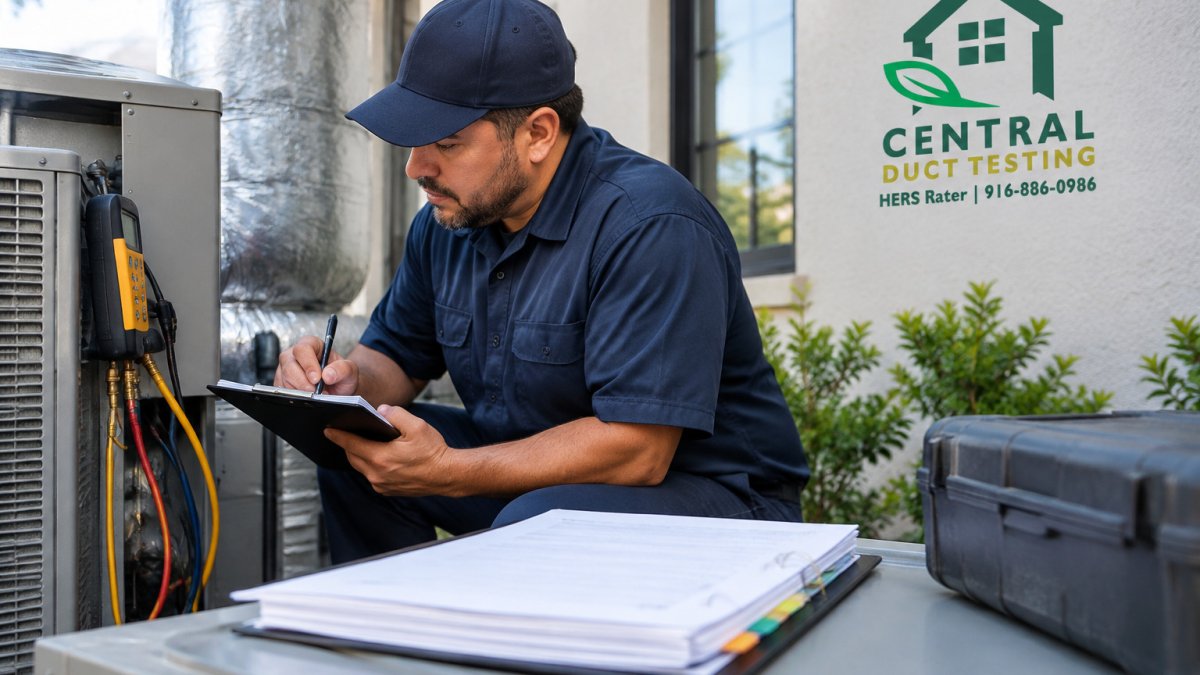
Field verification: a rater confirms the installed equipment matches the approved plans.
Diagnostic testing: a rater measures things like duct leakage and airflow.
Documentation: results go into the compliance paperwork your permit needs.
When Is HERS Testing Required for Commercial HVAC Work?
HERS testing is not automatically required for every HVAC project. The California Energy Commission says the requirement depends on the work being done, and properly permitted work triggers any testing the code requires. California Energy Commission explanation of when testing is triggered
Check these points before you assume testing applies:
Confirm the scope of work on your permit.
Ask the building department which verifications your project needs.
Review whether the work is new equipment, an alteration, or a changeout.
Commercial Versus Residential Scope: Which Rules Apply to Your Project
Commercial and residential projects follow different compliance paths under the Energy Code, and mixing them up is the most common reason a commercial HVAC permit stalls at final inspection. The distinction is not about the size of the equipment, it is about which part of Title 24, Part 6 the project falls under and which compliance documents the building department requires.
Residential projects, single-family homes, duplexes, and most low-rise multifamily buildings, use the residential compliance path. Field verification and diagnostic testing results are registered through the HERS provider and tied to the permit by a HERS registry ID. The certificate the building department looks for is the HERS verification report.
Commercial projects, nonresidential occupancies, high-rise residential, and most hotel and motel buildings, use the nonresidential compliance path. The relevant documents are the NRCA (Nonresidential Compliance and Acceptance) mechanical acceptance test certificates, not residential HERS registration. The tests themselves overlap, duct leakage, airflow, economizer function, but the forms, the registry, and the reviewer at the building department are different.
Use this decision sequence before you book any testing:
Identify the occupancy classification on the permit. The building department assigns it, and it drives the compliance path. A mixed-use building can have both residential and nonresidential portions on the same permit.
Check the scope of work. New construction, a tenant improvement, an equipment changeout, and a duct alteration can each trigger different verifications. A like-for-like changeout of a packaged rooftop unit is not treated the same as a duct system replacement.
Confirm the compliance pathway with the plans examiner. Ask specifically whether the project requires NRCA mechanical acceptance testing, residential HERS verification, or both. Get the answer in writing on the permit comments.
Match the rater's certification to the pathway. A rater certified for residential HERS verification is not automatically qualified to sign NRCA mechanical acceptance certificates. Confirm the credential before scheduling.
Watch out: A provider's service page that lists both residential and commercial work does not mean the same rater, the same forms, or the same registry apply to your project, confirm the specific credential and form set for your permit before the rater arrives on site.
For projects that straddle both paths, a mixed-use building, or a residential project with a commercial kitchen, plan on two separate verification packages and two sets of close-out documents. Budget the schedule for both, because the building department will not sign off until each pathway is complete.
What Commercial HVAC HERS Testing Costs in California
Costs depend on the project, so treat any single number as a rough guide. One California guide reports a typical HERS testing price of $250 to $450. That range is for general HERS work and does not specifically describe commercial projects. Venta guide to California HERS testing costs
Another California inspection guide estimates $150 to $400 for a single duct-leakage test and $200 to $450 for a full HVAC changeout test package. Those figures are market estimates, not commercial-only prices. ERE Inspections HERS test cost guide
For an accurate figure on your project, contact Central Duct Testing directly with your plans and scope. Pricing depends on the size of the system, the tests required, and the schedule.
The article gives these price ranges from California guides, which are general estimates rather than commercial-only prices.
Item | Value | Note |
General HERS testing | $250 to $450 | Typical price per one California guide |
Single duct-leakage test | $150 to $400 | Market estimate from an inspection guide |
Full HVAC changeout test package | $200 to $450 | Market estimate, not commercial-only |
The Test Procedures and Acceptance Criteria
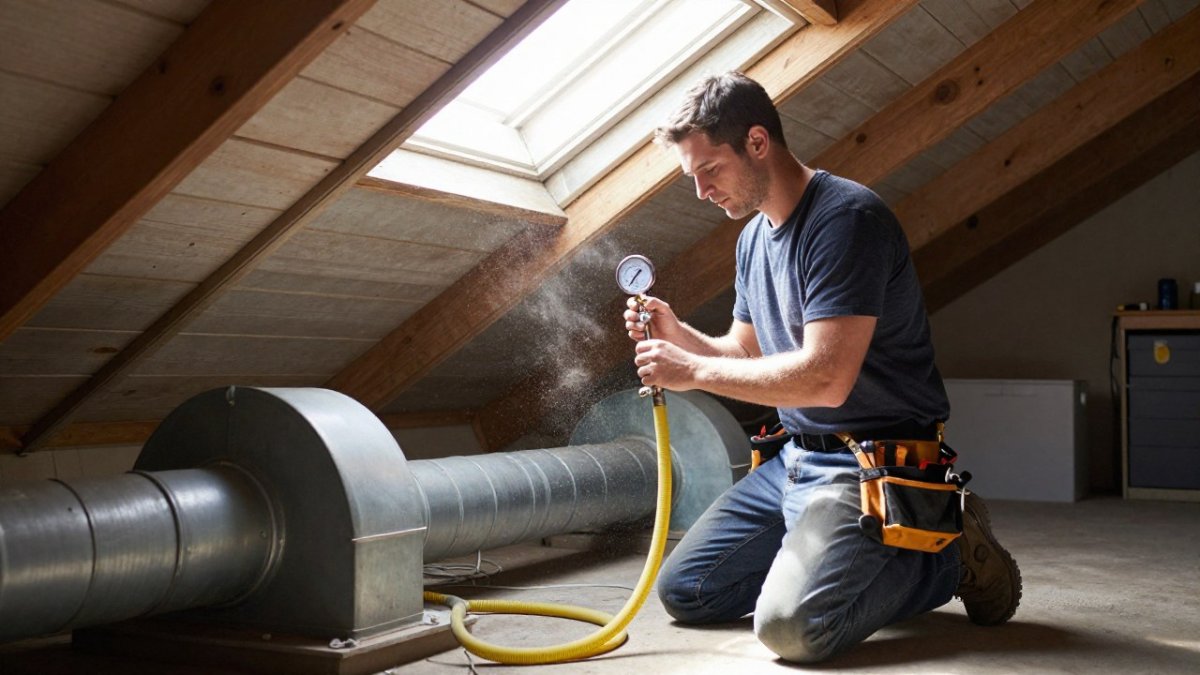
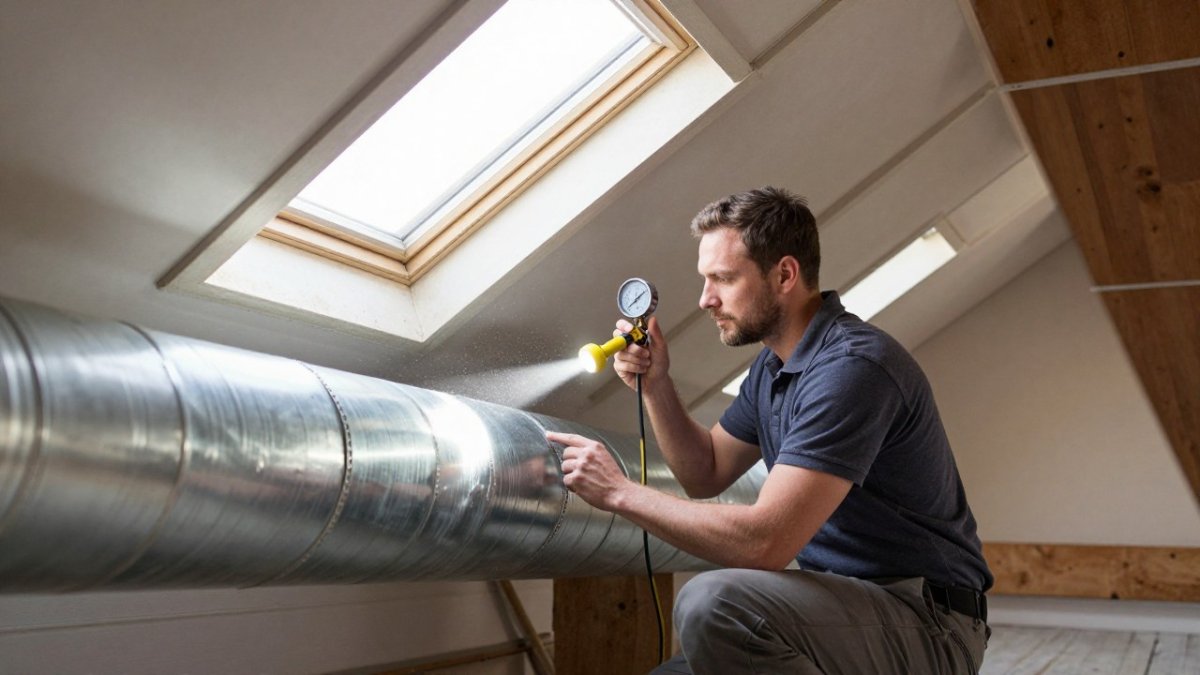
Each test checks a specific part of the system. To understand the financial stakes, read whether duct leakage tests are worth the penalty risk. A duct-leakage test, for example, measures how much air escapes through the ductwork. Results are compared against the limits in the code.
Understanding the HERS Test Certificate and Compliance Documentation
The certificate is the proof that testing was completed and passed. Your permit office will want to see it before signing off the project. Keep copies of every test report, including failed results and the retests that followed.
Stored correctly, these records make the close-out process much smoother. Ask your rater which forms they will file so nothing is missing at the end.
HERS Testing Equipment and What Raters Bring to the Site
Ask whether your rater is certified before booking, since certification is what makes the results count toward your permit. You can check the commercial and BPI certifications held by this rater.

Scheduling Your Commercial HERS Test Before Permit Close-Out
Book testing once the HVAC equipment is installed, running, and accessible. If you still need to locate a rater, see how to find and hire a California HERS rater. Scheduling too early means the rater cannot test a finished system, and scheduling too late can hold up your final inspection.
Contact Central Duct Testing with your project details to request a testing date and a quote.
Frequently Asked Questions
Is HERS testing required for commercial HVAC projects?
It depends on the scope of the work. Under California's Energy Code, Title 24, Part 6, field verification and diagnostic testing apply when a permitted HVAC installation or alteration triggers them, and the California Energy Commission says the requirement depends on the work being done. Commercial HVAC installations typically need an NRCA mechanical acceptance test certificate rather than the residential HERS registration. Confirm the required forms with your local building department before the inspection is scheduled.
How much does commercial HVAC HERS testing cost in California?
Pricing depends on the project and scope. Contact Central Duct Testing directly for a quote on your project.
What documentation do you receive after a HERS test?
After testing, you receive the completed test results and the certificate or registration that documents compliance with the applicable Energy Code requirements. Your building department uses this documentation to close out the permit. Keep these records with your project file, since inspectors and future owners may ask for them.
Comments