


What Is a HERS Rating: A Complete Guide

Table of Contents
What Is a HERS Rating and Why It Matters
Understanding the HERS Index Score
How the HERS Index Measures Home Energy Performance
The Reference Home and What a Score of 100 Means
Interpreting Your HERS Score: Above and Below 100
How HERS Testing Works and What Raters Test
The HERS Rating Process: From Assessment to Documentation
Key Testing Methods: Blower Door Tests and Duct Leakage Evaluation
The Role of a Certified HERS Rater
HERS Rating Cost and Timeline
HERS Ratings for New Construction Versus Existing Homes
How HERS Ratings Compare to Other Energy Labels
What a HERS Report Contains and How to Use It
Frequently Asked Questions
Last Updated: October 10, 2026
What Is a HERS Rating and Why It Matters
A HERS rating is a standardized measurement of a home's energy performance relative to a reference home that meets current energy codes.
For builders, contractors, and homeowners, understanding your HERS rating isn't optional anymore, it's essential. Title 24 compliance in California and similar energy codes across the country now mandate HERS testing for new construction and major renovations.
The HERS Index score determines whether your home meets state energy efficiency standards. A lower score signals better performance. Most new homes built to current code land between 50 and 80, while older existing homes typically score 130 or higher.
Understanding the HERS Index Score
How the HERS Index Measures Home Energy Performance
The HERS Index quantifies annual energy consumption by modeling how much energy a home would use under standardized conditions. A certified HERS rater inputs building characteristics into specialized software: insulation values, window types, HVAC equipment efficiency, duct sealing quality, and air leakage rates.
This approach creates consistency across different homes and climates. A HERS rater in Sacramento and a rater in San Francisco use the same methodology and software standards, so scores are directly comparable.
The HERS Index measurement focuses on the building envelope and mechanical systems, the factors a builder or contractor can control.
The Reference Home and What a Score of 100 Means
The reference home is the baseline against which all properties are measured. This theoretical home meets current energy code requirements for your region and typically has moderate insulation, standard-efficiency HVAC equipment, and average air sealing.
A HERS score of 100 means your home uses the same amount of energy as this reference home. In practical terms, it represents a home that just barely meets code, passing inspection but not exceeding efficiency expectations.
The reference home changes periodically as energy codes update. What qualified as a reference home in 2020 may differ from today's standard.
Interpreting Your HERS Score: Above and Below 100
Scores above 100 indicate a home uses more energy than the reference home, it's less efficient.
Scores below 100 show better-than-code performance. A score of 80 means the home uses 20% less energy than the reference standard; a score of 50 represents highly efficient construction with excellent air sealing, high-performance windows, and efficient mechanical systems.
The practical difference between a score of 100 and a score of 70 translates directly to utility bills. Lower-scoring homes cost less to heat, cool, and operate over time, which is why many buyers specifically ask about ratings during the purchase process.
How HERS Testing Works and What Raters Test
The HERS Rating Process: From Assessment to Documentation
The HERS rating process begins with a detailed home energy assessment.
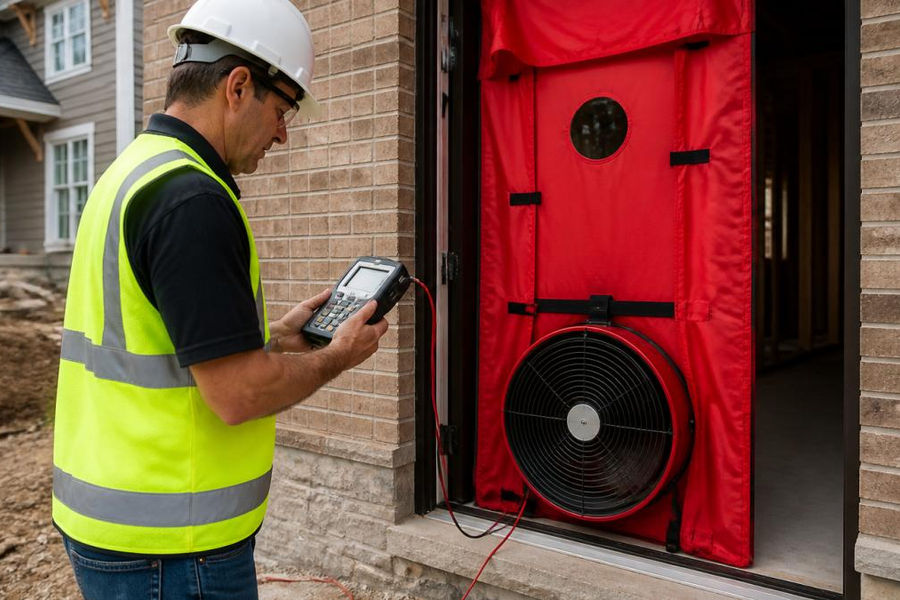
After the initial assessment, the rater conducts diagnostic testing to verify construction quality and identify air leakage points. The blower door test pressurizes the home to measure how much air escapes through cracks, gaps, and unsealed penetrations.
Once testing is complete, the HERS rater inputs all data into certified software and generates a detailed report including the final HERS Index score, component breakdowns (insulation R-values, window U-factors, equipment efficiency ratings), and recommendations for improvement.
Key Testing Methods: Blower Door Tests and Duct Leakage Evaluation
A blower door test measures air leakage by temporarily sealing the home's main entrance with a calibrated fan and door frame.
The blower door test takes 30 to 45 minutes and reveals where air is escaping: around windows, through electrical outlets, at foundation rim joists, or around penetrations for pipes and wires.
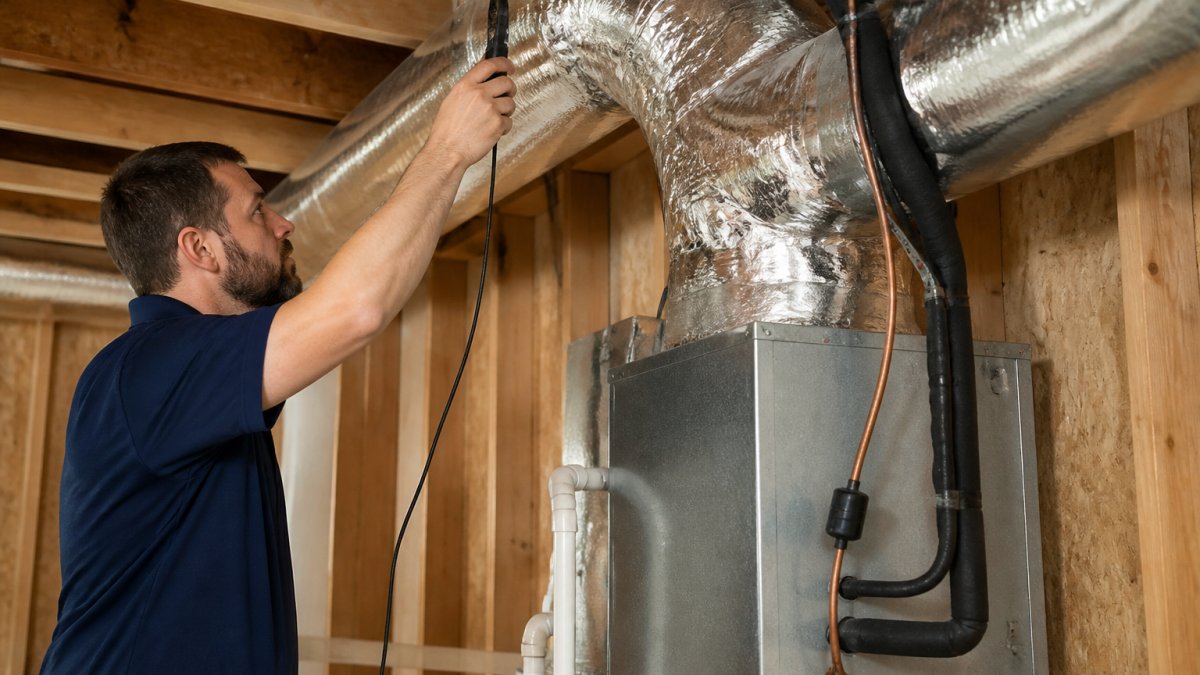
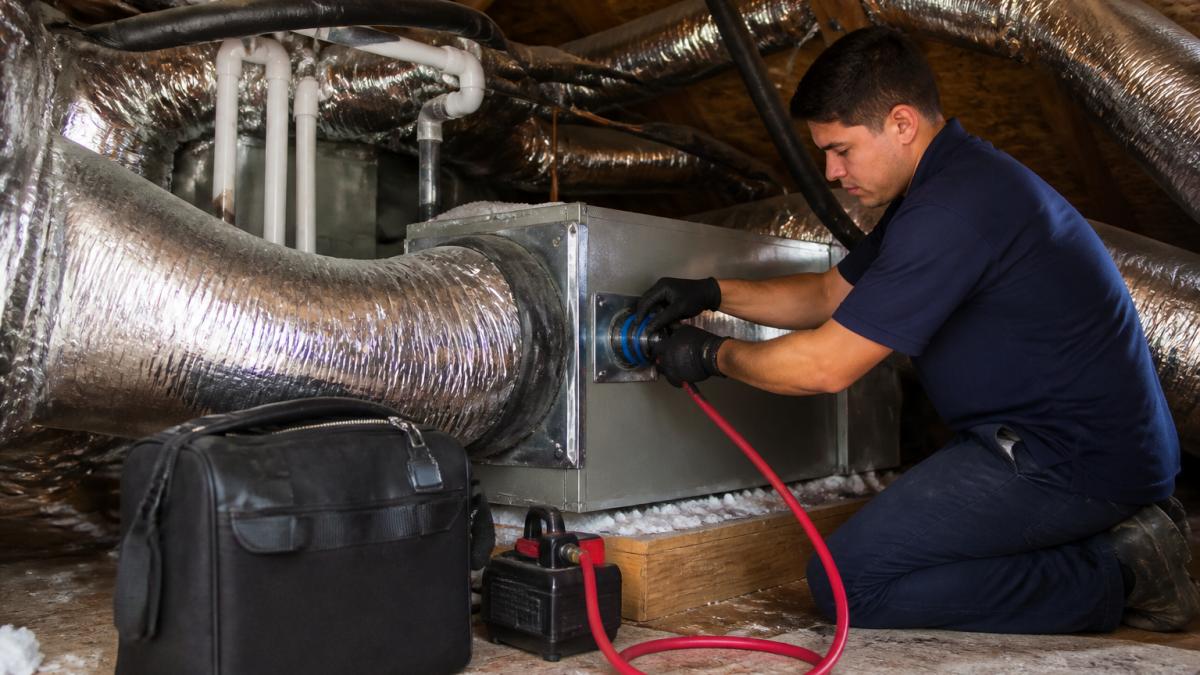
Duct leakage testing measures how much conditioned air escapes from the HVAC distribution system. The technician seals the home's supply and return registers, then pressurizes the ductwork to measure air loss as a percentage of total airflow.
Duct leakage is often overlooked during construction, but it's one of the easiest factors to control.
The Role of a Certified HERS Rater
A certified HERS rater is a trained professional who has passed accreditation exams and maintains current certification through continuing education. Raters understand building science, HVAC systems, energy code requirements, and the software used to calculate HERS scores.
Certified raters must be independent of the builder or contractor on the project to ensure unbiased testing and reporting. This independence protects both the homeowner and the builder by providing objective third-party verification that the home meets energy code requirements.
The rater's role extends beyond scoring. They advise contractors on which improvements will most effectively lower HERS scores, identify construction defects that affect energy performance, and explain how specific changes impact the final rating.
HERS Rating Cost and Timeline
HERS testing cost depends on home size, complexity, and local market rates. Factors affecting pricing include the number of zones in the HVAC system, whether the home has a basement or crawlspace, and the extent of diagnostic testing required.
The timeline for HERS testing typically spans two to three weeks from initial assessment to final report delivery. For new construction, this fits within the standard permit close-out process.
Many contractors schedule the initial HERS assessment during framing, before insulation and drywall are installed. This early timing allows raters to identify air sealing opportunities while corrections are still simple and inexpensive. A second blower door test after weatherization confirms whether air sealing work was effective, catching problems early.
HERS Ratings for New Construction Versus Existing Homes
New construction HERS ratings are mandatory in most jurisdictions as part of energy code compliance. Builders cannot close out permits without a final HERS report signed by a certified rater. New homes typically score better than existing homes because construction is controlled and materials are new.
Existing homes often have higher HERS scores because they may have older insulation, single-pane windows, or outdated HVAC equipment.
For existing homes undergoing Title 24 compliance work (such as HVAC replacement), a HERS rating verifies that the new system meets current standards. The rating becomes part of the permit documentation, similar to new construction.
How HERS Ratings Compare to Other Energy Labels
The HERS Index is the most widely recognized standardized energy rating in the United States for residential properties.
The National Home Energy Rating System (which HERS stands for) differs from utility-based energy labels, which simply show past electricity and gas consumption. A HERS rating predicts energy use based on the home's physical characteristics, not historical bills, allowing fair comparison between homes of different sizes, ages, and climates.
HERS ratings also differ from green building certifications like LEED, which evaluate environmental impact across multiple categories including energy, water, materials, and indoor air quality. A home can achieve a low HERS score without LEED certification, and vice versa. Many builders pursue both to maximize marketability and demonstrate commitment to sustainability.
What a HERS Report Contains and How to Use It
A HERS report includes the final HERS Index score, detailed component analysis, and testing data.
The report also contains recommendations for improvement. If air sealing could lower the score significantly, the rater identifies specific areas where sealing is most effective; if HVAC equipment efficiency is the limiting factor, the report suggests equipment upgrades.
For permit purposes, the HERS report documents that the home meets energy code requirements, and building inspectors review it as part of final sign-off.
Component | Purpose | Typical Range |
HERS Index Score | Overall energy efficiency rating | 50-130 |
Blower Door Test | Measures air leakage | 3-15 ACH50 |
Duct Leakage Test | Measures HVAC system losses | 5-25% |
Insulation R-Values | Thermal resistance documentation | R-13 to R-60 |
Window U-Factor | Heat transfer through glazing | 0.25-0.50 |
A HERS rating is your objective measure of how well your home performs against current energy standards.
Frequently Asked Questions
What does a HERS rating actually tell you about a home's energy performance?
A HERS rating quantifies how much energy your home uses compared to a standardized reference home. The Home Energy Rating System (HERS) Index score measures modeled energy consumption for heating, cooling, water heating, and appliances. A lower score means better energy efficiency and lower utility bills. The rating accounts for your home's insulation, HVAC system efficiency, window quality, air leakage, and renewable energy sources. This standardized measurement lets homeowners, buyers, and builders compare energy performance objectively across different properties.
Is a lower HERS Index score better?
Yes. A lower HERS score indicates better energy efficiency. A score of 100 represents the reference home's energy consumption. A score of 80 means your home uses 20% less energy than the reference home, while a score of 120 means it uses 20% more. New homes built to current energy codes typically score between 50 and 80. The lowest possible score is 0, which represents a net-zero energy home that produces as much energy as it consumes. Lower scores directly correlate with reduced energy costs and smaller environmental impact.
What does a HERS rater actually test during a home energy assessment?
A certified HERS rater conducts a comprehensive home energy assessment that includes a blower door test to measure air leakage in the building envelope, duct leakage testing to evaluate HVAC system efficiency, and a visual inspection of insulation, windows, doors, and heating and cooling systems. The rater collects data on your home's construction details, equipment specifications, and operational features. They then use this information with specialized software to model your home's energy consumption. The assessment produces a detailed HERS report with your energy rating, diagnostic findings, and recommendations for improvement.
How much does HERS testing cost and how long does it take?
HERS rating cost varies based on home size, complexity, and location. Pricing depends on the scope of testing, travel distance, and whether additional diagnostic work is needed. A typical assessment takes 2 to 4 hours for a residential property. The timeframe includes the on-site evaluation, equipment setup, testing procedures, and initial observations. After the assessment, the HERS rater processes data and generates your report, which typically takes 1 to 3 business days. Contact a certified HERS testing provider for a specific quote based on your project details and timeline requirements.
Why do I need a certified HERS rater instead of having my HVAC contractor perform the testing?
A certified HERS rater provides third-party verification required for Title 24 compliance and building permit approval. HERS raters complete specialized training, maintain certification through continuing education, and follow standardized protocols established by the Residential Energy Services Network (RESNET). They operate independently from contractors, ensuring unbiased assessment and documentation that satisfies regulatory requirements. Your HVAC contractor may perform duct testing or system work, but only a certified HERS rater can issue an official HERS rating that authorities accept for permit sign-off and energy code compliance.
Can a HERS rating help me lower my energy bills?
Yes. A HERS rating identifies energy efficiency gaps in your home and quantifies potential savings. The detailed report shows which improvements deliver the best return on investment, such as enhanced insulation, HVAC system upgrades, window replacements, or air sealing work. By prioritizing improvements that address your home's biggest energy losses, you can reduce utility bills significantly. New homes built to achieve lower HERS scores typically cost 10-15% less to operate annually compared to homes built to minimum code standards. The rating gives you a roadmap to make targeted improvements that directly reduce energy consumption and monthly costs.
What's the difference between a HERS rating and an MPG rating?
Both HERS scores and MPG ratings use a standardized reference point for comparison. MPG measures vehicle fuel efficiency relative to an average car, while HERS measures home energy performance relative to a reference home. A HERS score of 100 means your home uses the same energy as the reference home, just as an average vehicle achieves average MPG. Lower HERS scores indicate better efficiency, similar to higher MPG ratings indicating better fuel economy. Both systems allow consumers to compare performance across different products using a single, easy-to-understand number based on modeled or measured data.
Are HERS ratings required for existing homes undergoing renovations?
HERS ratings are mandatory for new construction in most jurisdictions to meet energy code requirements. For existing homes undergoing major renovations or HVAC system replacements, requirements vary by location and project scope. Some states and local building departments require HERS assessments when significant energy-related work is performed. Even when not required, homeowners often request HERS ratings voluntarily to document energy improvements, support energy-efficient mortgage programs, or prepare for home sale. Check with your local building department or a certified HERS rater to confirm whether your renovation project requires an official rating.
Contact Us Now

Comments